
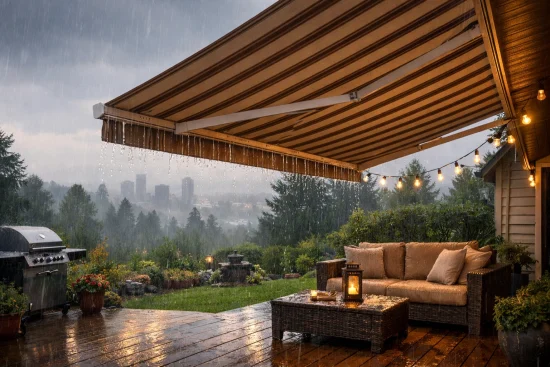
If you live in the Portland Metro area, Southwest Washington, or Vancouver, you know that rain isn’t just a weather forecast, it’s a lifestyle. We spend a good portion of our year navigating the “gray,” which makes those precious sunny days even more valuable. Naturally, when you invest in a SunSetter retractable awning, the first question on your mind is usually: “Can this thing handle the rain?”
It’s a fair question. After all, if you’re trying to enjoy a backyard barbecue in Lake Oswego or a quiet morning coffee on your deck in Camas, a surprise drizzle shouldn’t send you running indoors. At Portland Awnings, we hear this concern all the time.
The short answer? Yes, your SunSetter can handle rain, but there are some important “Portland-specific” details you need to know to keep your investment in tip-top shape for years to come.
Understanding the “Waterproof” vs. “Water-Repellent” Debate
When people search for information on whether a SunSetter retractable awning is waterproof, there is often some confusion about what that actually means. To give you the best advice, we need to look at the fabric.
SunSetter offers two primary types of fabric, and each reacts to our Pacific Northwest moisture a little differently:
- Laminated Fabric: This is SunSetter’s 100% waterproof option. It’s a 5-layer fabric that includes two layers of high-strength polyester mesh, topped with vinyl. If you have this fabric, the water literally cannot get through it. It’s ideal for those who want absolute protection from the rain.
- Woven Acrylic Fabric: This is a beautiful, breathable fabric that feels more like traditional cloth. While it isn’t technically “waterproof,” it is highly water-repellent. Think of it like a high-end rain jacket; the water beads up and rolls off. It’s perfect for the light “Portland mist” we experience so often.
That being said, even if your fabric is 100% waterproof, your awning isn’t a permanent roof. Let’s talk about why that distinction matters.

The Portland Drizzle vs. The Pacific Northwest Downpour
Let’s face it: there’s a big difference between a light spring shower in Beaverton and a heavy November windstorm.
Your SunSetter retractable awning is designed to be a “shade product” first and foremost. It’s built to protect you from UV rays and keep your patio significantly cooler. The good news is that it’s also perfectly capable of handling those light, vertical showers that characterize so many of our Oregon afternoons.
However, we always tell our customers at Portland Awnings to be cautious when the weather takes a turn for the worse. If you’re experiencing a heavy downpour or sustained, lashing rain, it’s time to hit the “retract” button.
Why? Because water has weight. If enough rain falls faster than it can run off the sides, it can “pool” in the center of the fabric. This pooling puts immense stress on the arms and the mounting brackets of the awning. Over time, heavy water weight can stretch the fabric or even damage the motor.
Why “Pitch” Is Your Best Friend
One of the most important factors in how your awning handles rain is the “pitch” (or the angle) at which it is installed.
When we install Portland awnings, we ensure the pitch is steep enough to allow water to migrate off the fabric naturally. If an awning is installed too flat, even a light rain can start to collect. If you notice water staying on your fabric rather than rolling off, it might be time to check your awning models or talk to us about adjusting the slope.
Simply put, gravity is your best defense against water damage. By maintaining a proper angle, you ensure that your SunSetter stays dry and tension-free.

Wind: The Real Enemy of the Awning
In the Portland and Vancouver area, rain rarely travels alone, it usually brings wind along for the ride.
While the rain itself can be managed by high-quality fabric, the wind is what typically causes the most trouble for retractable systems. SunSetter awnings are built with high-quality components, but they are still large, sail-like structures. A strong gust can lift the awning or torque the frame.
The general rule of thumb we share at Portland Awnings is: If it’s too windy or rainy to be sitting outside comfortably, your awning shouldn’t be out either.
If you’re the type of person who might forget to retract the awning when a storm rolls in while you’re at the grocery store, we highly recommend looking into a Wireless Rain Sensor or a Wind Sensor. These smart accessories can detect moisture or vibration and automatically retract your awning, giving you total peace of mind. You can find more about these in our products and accessories section.
Don’t Forget About UV Protection
While we’ve been focusing on the rain, we can’t forget why most people buy a SunSetter retractable awning in the first place: the sun!
Even on those “partly cloudy” Portland days, UV rays are still hitting your deck and your skin. SunSetter fabrics are designed to block 99% of harmful UVA and UVB rays. This doesn’t just keep you safe; it also protects your indoor furniture, carpets, and drapes from fading.
The beauty of the SunSetter is its versatility. When the sun is scorching, you extend it. When the light Portland rain starts to fall, you can stay outside and stay dry. And when the big storms hit, you retract it into its protective housing to keep it safe.

Maintenance Tips for a Rainy Climate
Living in a damp climate means we have to be a little more mindful of mold and mildew. The high-quality fabrics used by SunSetter are treated to be resistant to these issues, but they aren’t completely immune if they aren’t cared for.
Here is a pro-tip from the team at Portland Awnings: Never leave your awning rolled up wet for long periods.
If you have to retract your awning while it’s still raining, that’s fine! But as soon as the sun comes out, extend it again and let it air dry completely. Trapping moisture inside a rolled-up awning is the fastest way to encourage mildew growth. A little bit of sunshine is the best natural disinfectant for your fabric.
Warranty and Peace of Mind
We know that a SunSetter retractable awning is an investment in your home’s value and your family’s comfort. That’s why we love that SunSetter stands behind their products with such strong warranties.
Standard models typically come with a 5-year limited warranty, while the Platinum Series (featuring Sunbrella® fabrics) offers even longer protection—with extended warranty options that can cover you out to 10 years. This covers defects in materials and workmanship, ensuring that your awning stays a functional part of your home for years. If you want to dive deeper into the specifics, check out our FAQs or our About Us page to see why we stand by these products.
Why Choose Portland Awnings?
We’ve been serving the Portland Metro and Southwest Washington area for years, and we understand the unique challenges our weather presents. We don’t just sell you a product; we help you find the right solution for your specific home and lifestyle.
Whether you’re in West Linn, Vancouver, or right in the heart of Portland, we provide expert installation that ensures your awning is set at the perfect pitch to handle our local weather. We believe in being honest about what these products can and can’t do, which is why we’re always clear about when to retract your awning and how to maintain it.
Are you ready to transform your outdoor living space? Whether you’re looking for shade from the summer sun or a dry spot to enjoy the fresh Oregon air during a light drizzle, we’re here to help.

Frequently Asked Questions
Can I leave my SunSetter awning out in the rain?
Yes, you can leave it out during light rain and mist. However, you should retract it during heavy downpours or windstorms to prevent water pooling and structural damage.
Is the SunSetter fabric waterproof?
SunSetter’s Laminated fabric is 100% waterproof. Their Woven Acrylic fabric is highly water-repellent but not technically “waterproof.” Both are excellent for the Portland climate.
How do I prevent mold on my retractable awning?
The best way to prevent mold is to avoid leaving the awning rolled up while wet. If you must retract it during rain, extend it as soon as the weather clears to let it dry completely in the air.
What happens if water pools on my awning?
Water pooling can stretch the fabric and put dangerous weight on the frame and motor. If you see water beginning to pool, retract the awning immediately and contact Portland Awnings to discuss adjusting the pitch of your installation.
Does the SunSetter warranty cover weather damage?
The warranty covers manufacturer defects in the fabric and frame. However, damage caused by leaving the awning out in high winds or heavy storms (acts of nature) is generally not covered, which is why retraction during severe weather is so important.
How long does a SunSetter awning last in Portland?
With proper care: including retracting it during storms and letting it dry before storage: a SunSetter awning can last 10 to 15 years or more.
If you have more questions about how a SunSetter retractable awning can work for your home, feel free to contact us at Portland Awnings today! We’d love to help you find the perfect fit for your patio.